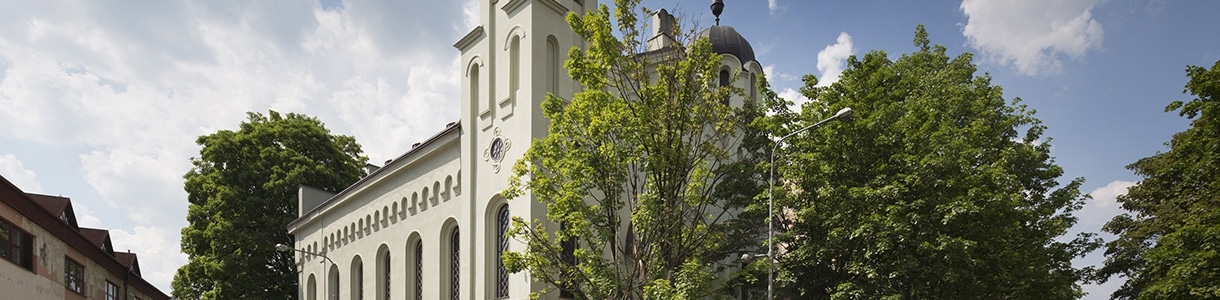
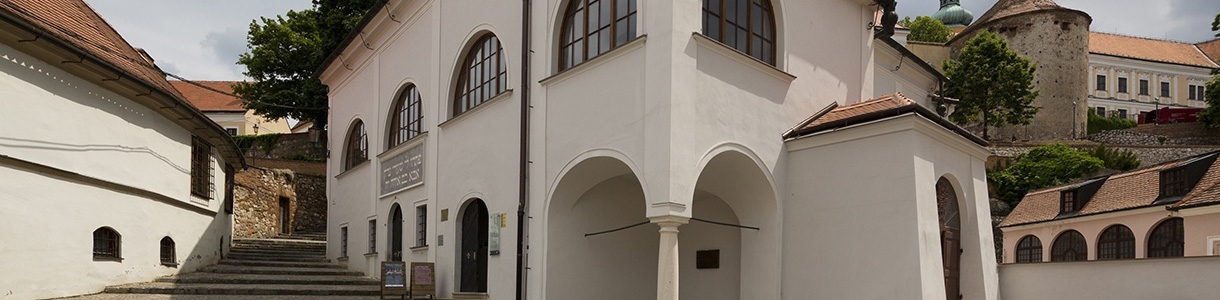
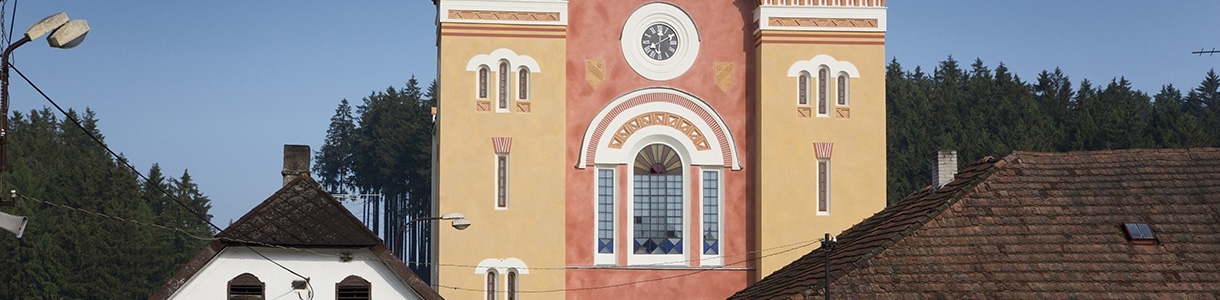
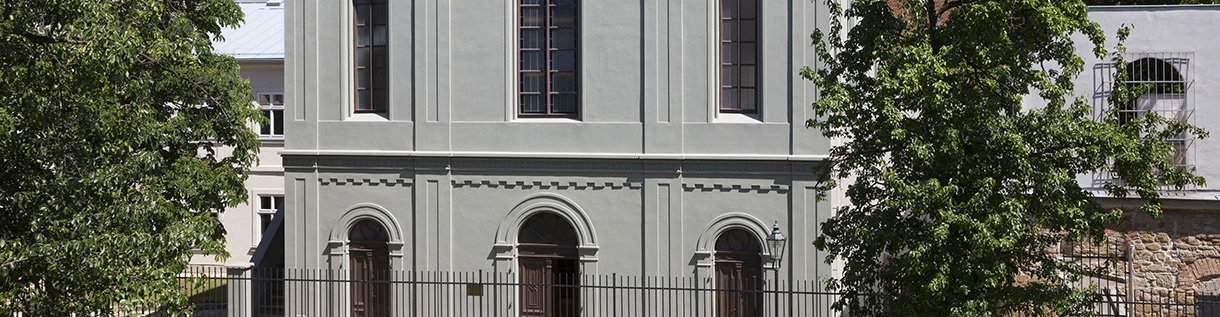
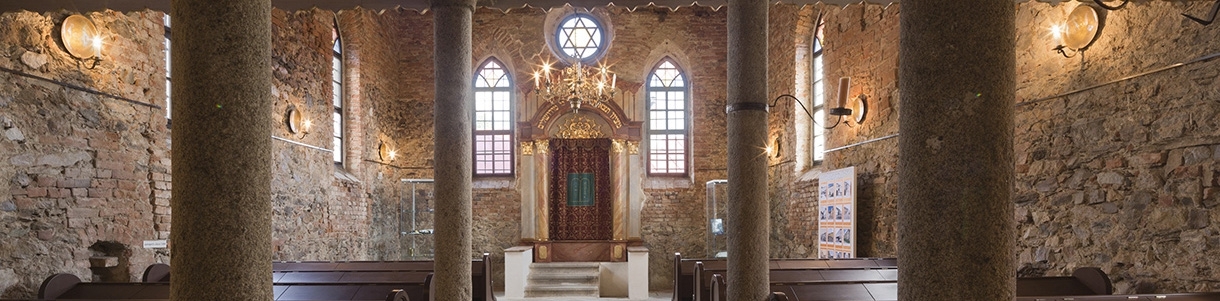
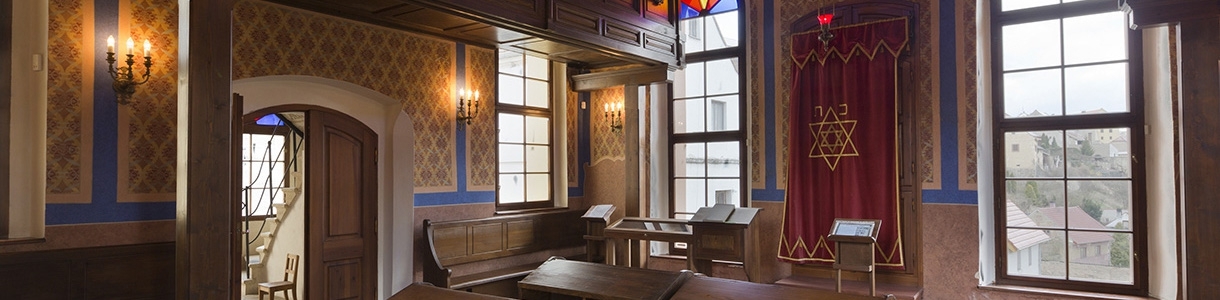
Batelov
Neveklov
The project was founded and implemented by the Federation of Jewish Communities in the Czech Republic.
It is a coordinated and methodologically managed network of regional cultural and educational centres of Jewish culture.
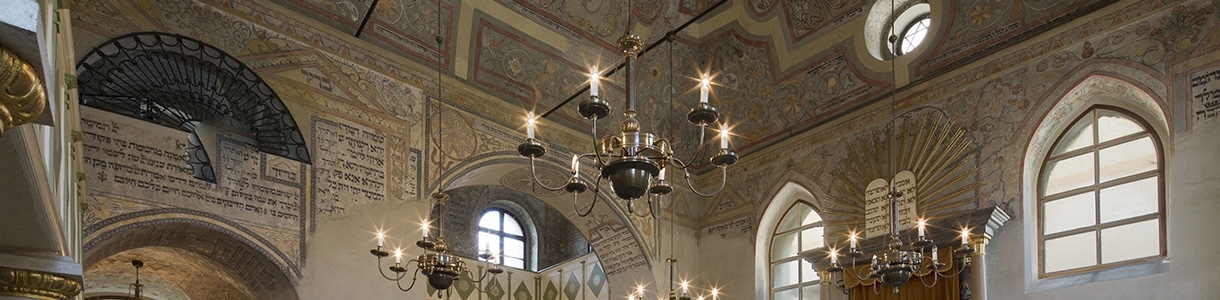
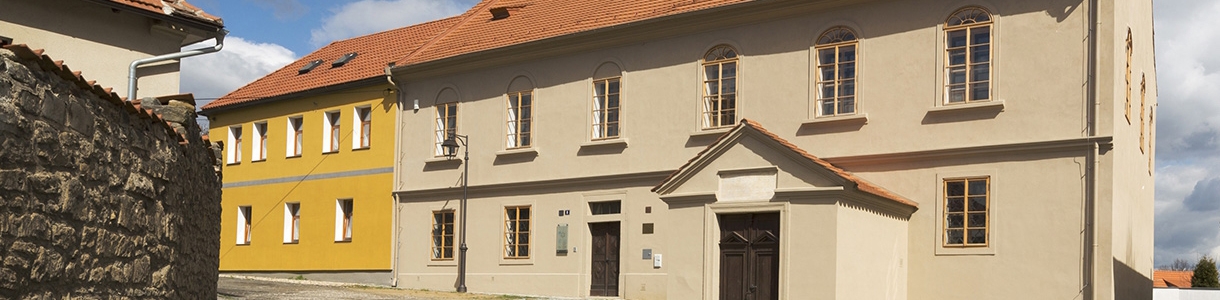
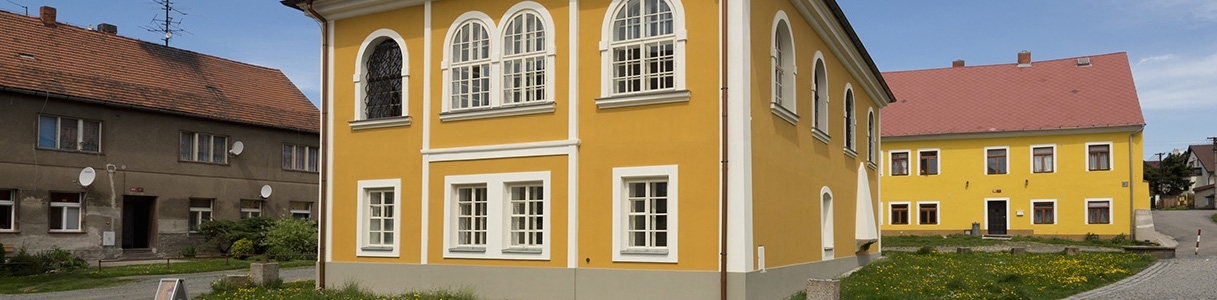
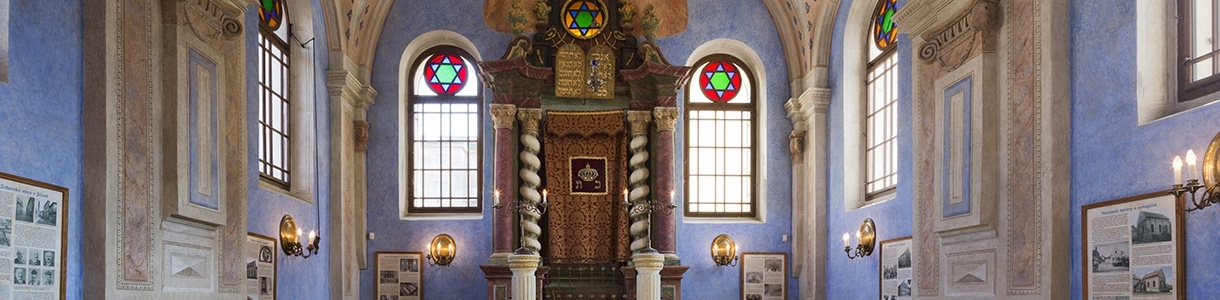
In the authentic environment of restored synagogues, visitors can learn about Jewish history, Judaism, literature, architecture, traditions and customs through permanent exhibitions, while contemporary artists are presented at short-term exhibitions. Thanks to the unique atmosphere and acoustics, concerts here become a unique experience.
This network is gradually expanding by other restored synagogues.

The main goals of the European Route of Jewish Heritage are to preserve, to promote and to keep alive Jewish heritage, to set up cultural routes, tourism and social development around these sites and to make Europeans aware of the cultural richness brought to Europe by the Jews.
The Cultural Routes programme was launched by the Council of Europe in 1987 with the Declaration of Santiago de Compostela.
Over 31 Cultural Routes in 2018, of the Council of Europe provide a wealth of leisure and educational activities for all citizens across Europe and beyond. They cover a range of different themes, from architecture and landscape to religious influences, from gastronomy and intangible heritage to the major figures of European art, music and literature.
Exhibition of photographs by Jan Halík. The opening will take place on April 1st at 4 p.m.
the suffering of the Jews in the years 1938–1945, culminating in the tragedies in the extermination camps, is still overshadowed by the fact that the Czechoslovak Jews did not surrender to the fate of the persecuted community and, despite the increased terror, joined the resistance in Bohemia, Moravia and Slovakia. Thousands of them became members of the Czechoslovak army and fought against Nazism on all fronts of the Second World War with arms in hand.
Another stop of the traveling exhibition, which maps the life and work of the founder of the famous Koh-i-noor company, Jindřich Waldes, whose company was made famous by an innovative press stud, the Koh-i-noor snap, which also became part of the emblem, which features a woman's head with a button in her eye.
A joint performance by cellists Jiří Hošek, his daughter Dominika Weiss Hošková, and children and siblings Adina, Noah, Micha, Amos, and Natália. The program includes music by Jewish authors and klezmer music.
Hieronymus Lorm, original name Heinrich Landesmann, was an Austrian deaf-blind poet, philosopher and militant journalist, coming from a Jewish family from Mikulov. At the age of 15 he lost his hearing, and gradually his sight. Nevertheless, from the age of twenty he was still interested in what was happening around him, and created a tactile language, the so-called Lorm alphabet, which is still used internationally today. The exhibition will guide you through his life and work.
The authors of the exhibition PhDr. Hana Králová, Ph.D. from NTM Prague and Mgr. Martin Sovák from SOA Prague will guide you through the interesting history of the Waldes company and the fate of its founder Jindřich Waldes, "the button king"