-
Events
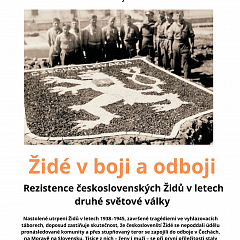
Úštěk - THE EXHIBITION JEWISH RESISTANCE DURING WORLD WAR II - 01.05.2026 - 30.10.2026
the suffering of the Jews in the years 1938–1945, culminating in the tragedies in the extermination camps, is still overshadowed by the fact that the Czechoslovak Jews did not surrender to the fate of the persecuted community and, despite the increased terror, joined the resistance in Bohemia, Moravia and Slovakia. Thousands of them became members of the Czechoslovak army and fought against Nazism on all fronts of the Second World War with arms in hand.
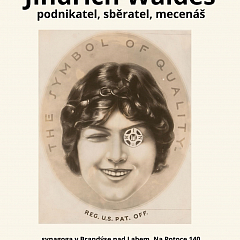
Brandýs n/Labem - THE EXHIBITION OF JINDŘICH WALDES, BUSINESSMAN, COLLECTOR, PATRON - 01.05.2026 - 31.10.2026
Another stop of the traveling exhibition, which maps the life and work of the founder of the famous Koh-i-noor company, Jindřich Waldes, whose company was made famous by an innovative press stud, the Koh-i-noor snap, which also became part of the emblem, which features a woman's head with a button in her eye.
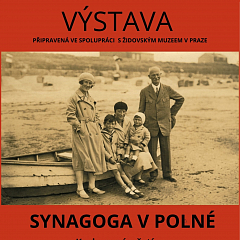
Polná - THE KOLBEN FAMILY STORY - 05.07.2026 - 31.10.2026
Emil Kolben was one of the most prominent Czech electrical engineers and entrepreneurs, the founder of the Kolben & Co. factory, and the CEO and principal shareholder of Českomoravská-Kolben-Daněk (ČKD). He was born into a Jewish family in the village of Strančice near Prague and died in the Terezín concentration camp. The exhibition explores his life story and also life of his entire family.
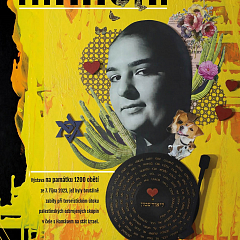
Březnice - HINNENI - TADY JSEM - 22.07.2026 - 31.10.2026
Exhibition in memory of the victims of October 7 from the Hadera-Eiron region. The works are created by Czech, Israeli and American artists.